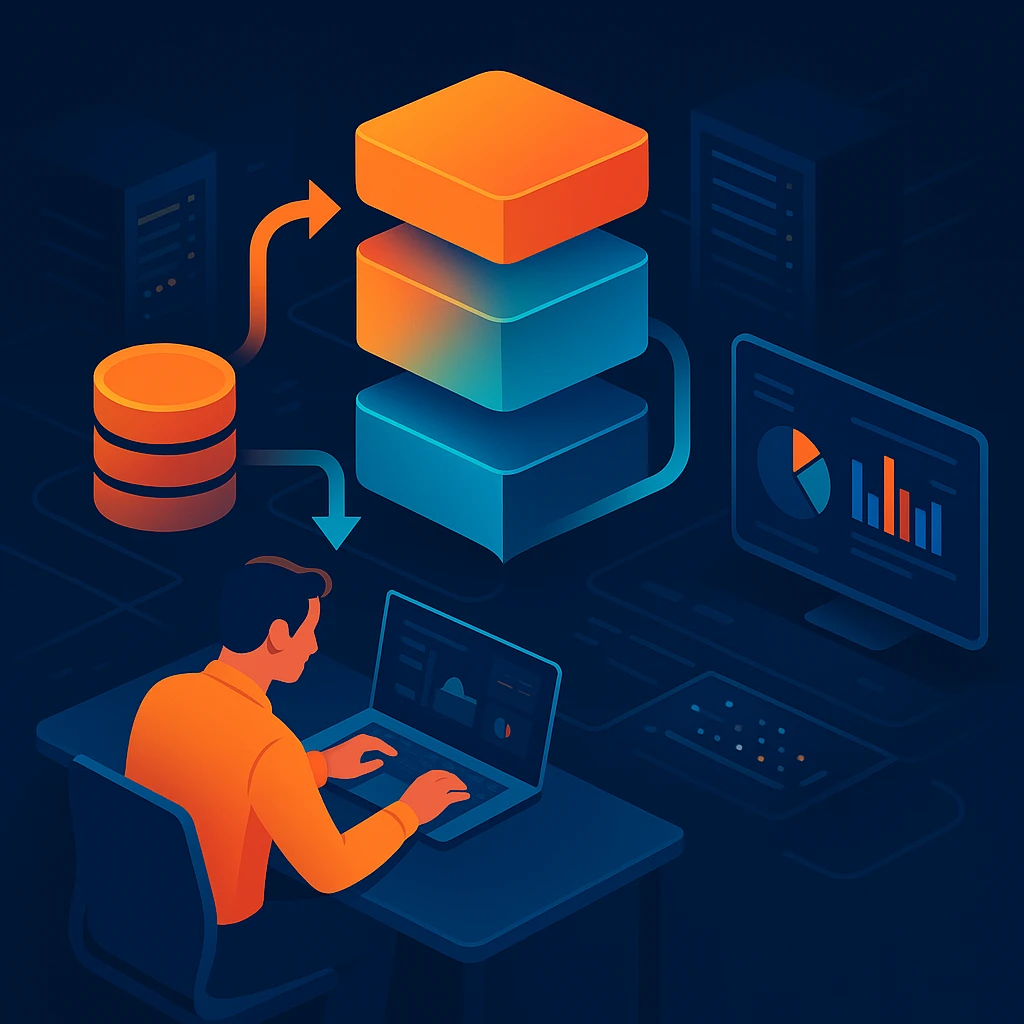
Edge Computing for IoT & Real-Time Applications

Processing IoT data locally reduces latency, enhances security, and enables real-time decisions while complementing cloud resources.
As IoT devices proliferate, edge computing is no longer optional—it is essential to meet the demands of latency-sensitive, secure, and autonomous real-time applications.
Why Now
The Internet of Things (IoT) ecosystem is exploding with billions of connected devices generating massive volumes of data every second. Centralized cloud architectures struggle to keep up with the sheer volume and velocity, often introducing latency and potential security risks.
Edge computing addresses these challenges by processing data closer to the source—at the “edge” of the network—enabling faster response times and reducing the burden on cloud infrastructure.
For CXOs and decision-makers, embracing edge computing is critical to unlocking real-time insights and operational agility in IoT deployments.
Benefits and Upside
Reduced Latency
By processing data locally, edge computing eliminates delays inherent in transmitting data to and from centralized clouds, vital for time-sensitive applications like autonomous vehicles or industrial automation.
Enhanced Security
Local data processing reduces exposure to external networks, limiting attack surfaces and supporting compliance with data sovereignty regulations.
Scalability & Bandwidth Savings
Filtering and aggregating data at the edge reduces bandwidth consumption and cloud storage costs, enabling more scalable IoT deployments.
Resilience & Autonomy
Edge devices can continue operating and making decisions even during cloud outages or network disruptions, critical for mission-critical environments.
Improved User Experience
Faster local processing enables smoother, more responsive applications—from smart homes to augmented reality—enhancing end-user satisfaction.
Risks and Trade-offs
Edge computing introduces complexity in deployment and management, requiring robust orchestration and monitoring tools to maintain consistency across distributed nodes.
Security at the edge can be a double-edged sword; while reducing exposure, distributed devices may increase the attack surface if not properly secured.
Balancing workloads between edge and cloud demands careful architectural planning to avoid redundancy, data silos, or inefficient resource utilization.
Without proper governance, edge deployments risk becoming fragmented, complicating maintenance and increasing operational costs.
Principles and Guardrails
- Design for hybrid orchestration: integrate edge and cloud management seamlessly.
- Enforce strict security policies including device authentication and encrypted data flows.
- Implement modular, containerized workloads for portability across diverse edge hardware.
- Prioritize data processing based on latency sensitivity and bandwidth constraints.
- Continuously monitor edge nodes to detect anomalies and automate remediation.
Edge vs. Cloud: Key Metrics Comparison
| Metric | Edge Computing | Cloud Computing |
|---|---|---|
| Latency | Milliseconds to sub-second | Seconds or more, depending on network |
| Data Volume Sent to Cloud | Minimal (filtered/aggregated) | High (raw data streams) |
| Security Exposure | Distributed, requires endpoint hardening | Centralized, controlled environment |
| Operational Complexity | Higher, due to distributed nodes | Lower, centralized management |
Sample Edge Configuration Snippet
edgeNode:
  id: node-42
  location: factory-floor-3
  capabilities:
    - sensor-data-aggregation
    - local-ml-inference
  network:
    interface: eth0
    ip: 192.168.10.42
    secureTunnel: true
  dataHandling:
    filterRules:
      - type: temperature
        threshold: 75
        action: alert
      - type: vibration
        threshold: 0.05
        action: log
Example Real-Time Decision Logic
if sensor.temperature > 75:
    activateCoolingSystem()
    sendAlert("Temperature threshold exceeded")
elif sensor.vibration > 0.05:
    logEvent("High vibration detected")
else:
    continueMonitoring()
Metrics That Matter
| Goal | Signal | Why It Matters |
|---|---|---|
| Latency Reduction | Average response time (ms) | Direct impact on real-time application performance |
| Bandwidth Usage | Data volume sent to cloud | Cost efficiency and network load management |
| Edge Node Uptime | Percentage uptime | Reliability of distributed infrastructure |
| Security Incidents | Number of breaches or attempts | Risk management and trustworthiness |
| Operational Cost | Total cost of ownership (TCO) | Financial viability of edge deployment |
Anti-patterns to Avoid
Ignoring Edge Security
Failing to secure edge devices can lead to breaches that compromise the entire network.
Overloading Edge Nodes
Assigning excessive workloads to edge devices beyond their capacity degrades performance and reliability.
Neglecting Hybrid Integration
Treating edge and cloud as isolated silos limits visibility and undermines operational efficiency.
Adoption Plan
- Days 1–30: Assess current IoT infrastructure and identify latency-critical workloads suitable for edge.
- Weeks 5–8: Pilot edge deployments with select devices, focusing on security and orchestration.
- Weeks 9–12: Develop integration pipelines between edge nodes and cloud management platforms.
- Months 4–6: Scale edge computing across additional sites, monitor performance and costs closely.
- Months 7–9: Implement automated monitoring, anomaly detection, and update mechanisms.
- Months 10–12: Review metrics, refine policies, and establish long-term governance frameworks.
- Ongoing: Continuously evolve edge software and hardware capabilities to meet emerging demands.
Vignettes and Examples
Smart Manufacturing: A factory deploys edge nodes on assembly lines to monitor equipment vibrations and temperature, triggering immediate maintenance alerts before failures occur, reducing downtime.
Autonomous Vehicles: Edge computing inside vehicles enables real-time sensor fusion and decision-making without relying on cellular networks, ensuring safe navigation even in remote areas.
Retail Analytics: Stores use edge devices to analyze foot traffic and purchase behavior locally, adapting marketing displays instantly and protecting customer data privacy.
Conclusion
Edge computing is a strategic imperative for organizations seeking to harness the full potential of IoT and real-time applications. By processing data locally, businesses can achieve lower latency, stronger security, and greater resilience, all while optimizing cloud resource usage.
For CXOs, the path forward requires thoughtful planning, balancing the benefits against operational complexities, and adopting best practices to ensure scalable, secure, and efficient edge deployments.
Edge computing is not just an add-on—it is a fundamental shift in how organizations architect their IoT and real-time systems for the future.