ETL (Extract, Transform, Load) Process and Its Contemporary Relevance
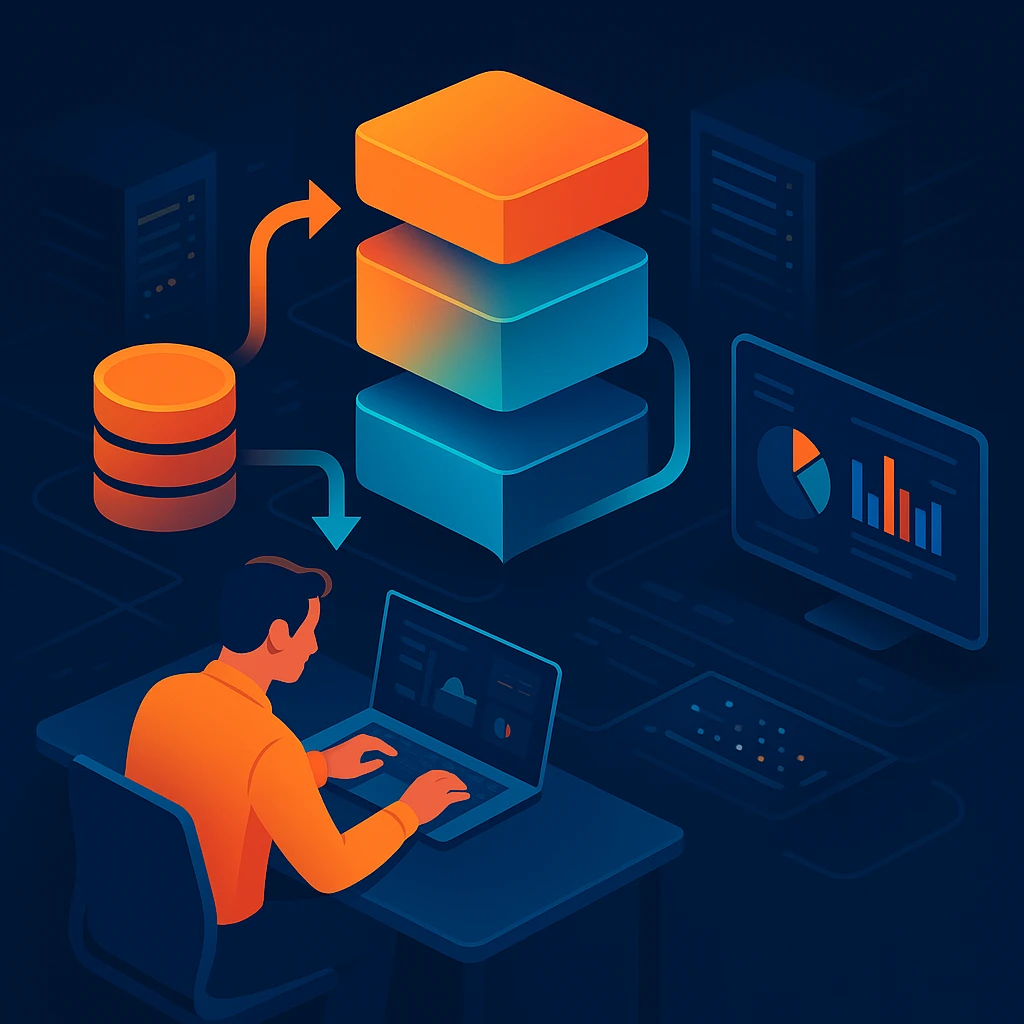
Understanding why ETL remains indispensable for modern data-driven enterprises despite evolving technologies.
ETL is the backbone of cohesive data integration, enabling organizations to unify diverse data sources into actionable insights efficiently and reliably.
Why Now / Context
In today’s data-driven world, companies face an ever-growing volume and variety of data from multiple sources — cloud platforms, on-premises systems, IoT devices, and third-party feeds. This complexity demands robust processes that ensure data is accurate, consistent, and accessible for timely decision-making.
While newer data integration approaches like ELT and streaming pipelines gain traction, ETL remains a foundational technique for harmonizing heterogeneous data before loading it into centralized systems like data warehouses or lakes.
Modern ETL tools have evolved to address scalability and automation challenges, making ETL not just relevant but essential for enterprises undergoing cloud migration, implementing business intelligence, or managing big data analytics.
Benefits / Upside
Data Consistency and Quality
ETL processes enforce validation, cleansing, and standardization, ensuring that data fed into analytics systems is reliable and accurate.
Unified Data Integration
ETL consolidates data from diverse sources, enabling a single source of truth that supports comprehensive reporting and analysis.
Automation and Scalability
Modern ETL platforms support automated workflows and elastic scaling, handling growing data volumes without sacrificing performance or reliability.
Improved Decision-Making
Timely access to clean, consolidated data empowers executives and analysts to make informed decisions that drive business value.
Support for Compliance and Auditing
ETL workflows can include data lineage and audit trails, helping organizations meet regulatory requirements and governance standards.
Risks / Trade-offs
Despite its strengths, ETL comes with challenges. Complex transformations can increase processing time, potentially delaying data availability. Rigid ETL pipelines may struggle to adapt quickly to changing data schemas or business needs.
Additionally, traditional ETL often requires significant upfront design and maintenance effort, which can be resource-intensive for organizations without mature data teams.
Beware of over-engineering ETL pipelines with unnecessary complexity that slows down agility and increases operational overhead.
Principles / Guardrails
- Design for modularity: break ETL into manageable, reusable components.
- Prioritize data validation early in the pipeline to catch issues promptly.
- Automate monitoring and alerting to detect failures or anomalies quickly.
- Optimize transformations to balance performance and maintainability.
- Ensure clear documentation and data lineage for transparency and compliance.
ETL vs. ELT vs. Streaming Pipelines
| Approach | Key Characteristics | Best Use Cases |
|---|---|---|
| ETL | Extract data, transform before loading into target systems. | Complex transformations, compliance, batch processing. |
| ELT | Load raw data first, transform within the data warehouse. | Cloud-native analytics, scalable data lakes, flexible schema. |
| Streaming Pipelines | Continuous data flow with near real-time processing. | Event-driven architectures, IoT, fraud detection. |
Sample ETL Configuration Snippet
extract:
  source:
    type: database
    connection_string: "Server=sqlserver01;Database=Sales;User ID=etl_user;Password=********"
  query: |
    SELECT order_id, customer_id, order_date, amount
    FROM orders
    WHERE order_date >= '2024-01-01'

transform:
  steps:
    - type: filter
      condition: "amount > 0"
    - type: map
      mappings:
        order_id: string
        customer_id: string
        order_date: date
        amount: decimal(10,2)

load:
  destination:
    type: data_warehouse
    table: sales.orders_cleaned
    mode: upsert
Example SQL Transformation Logic
WITH filtered_orders AS (
  SELECT
    order_id,
    customer_id,
    order_date,
    amount
  FROM raw_orders
  WHERE amount > 0
)
INSERT INTO sales.orders_cleaned (order_id, customer_id, order_date, amount)
SELECT order_id, customer_id, order_date, amount
FROM filtered_orders
ON CONFLICT (order_id) DO UPDATE SET
  amount = EXCLUDED.amount,
  order_date = EXCLUDED.order_date;
Metrics that Matter
| Goal | Signal | Why it Matters |
|---|---|---|
| Data Freshness | Latency between extraction and load completion | Ensures timely availability of insights |
| Error Rate | Number of failed ETL jobs per period | Indicates reliability and stability of pipelines |
| Data Quality | Percentage of records passing validation checks | Measures accuracy and trustworthiness |
| Throughput | Volume of data processed per unit time | Reflects scalability and efficiency |
| Cost Efficiency | Resource utilization and cloud spend | Optimizes operational expenses |
Anti-patterns to Avoid
Monolithic Pipelines
Building large, inflexible ETL workflows that are hard to maintain and slow to adapt to change.
Ignoring Data Quality
Loading data without validation or cleansing, resulting in unreliable analytics and poor decision-making.
Manual, Non-Automated Processes
Reliance on manual steps increases risk of errors, slows execution, and limits scalability.
Adoption Plan
- Assess current data sources, volume, and transformation needs to define scope.
- Select ETL tools or platforms that align with organizational goals and technical environment.
- Design modular, maintainable ETL workflows incorporating validation and error handling.
- Implement automation for scheduling, monitoring, and alerting to reduce manual intervention.
- Pilot ETL pipelines with key data sets and iterate based on feedback and performance metrics.
- Roll out across broader data domains, ensuring documentation and training for stakeholders.
- Continuously monitor, optimize, and evolve ETL processes to adapt to changing data landscapes.
Vignettes / Examples
A retail company migrated its legacy sales data into a cloud data warehouse using ETL pipelines that standardized disparate formats and enriched data with customer demographics, enabling advanced marketing analytics.
A financial services firm implemented automated ETL workflows with robust validation to feed real-time risk models, improving compliance and reducing manual reporting errors.
An IoT platform uses ETL to batch process device telemetry overnight, transforming raw sensor data into structured formats that support daily operational dashboards and anomaly detection.
Conclusion
ETL remains a cornerstone of effective data integration, bridging the gap between diverse data sources and centralized analytics platforms. Its continued evolution toward automation, scalability, and adaptability ensures that ETL processes meet the demands of modern enterprise environments.
For CXOs and decision-makers, investing in mature ETL strategies is an investment in data quality, operational efficiency, and ultimately, competitive advantage.
Reliable data integration through ETL is not a legacy burden—it is a strategic enabler of insight-driven leadership.