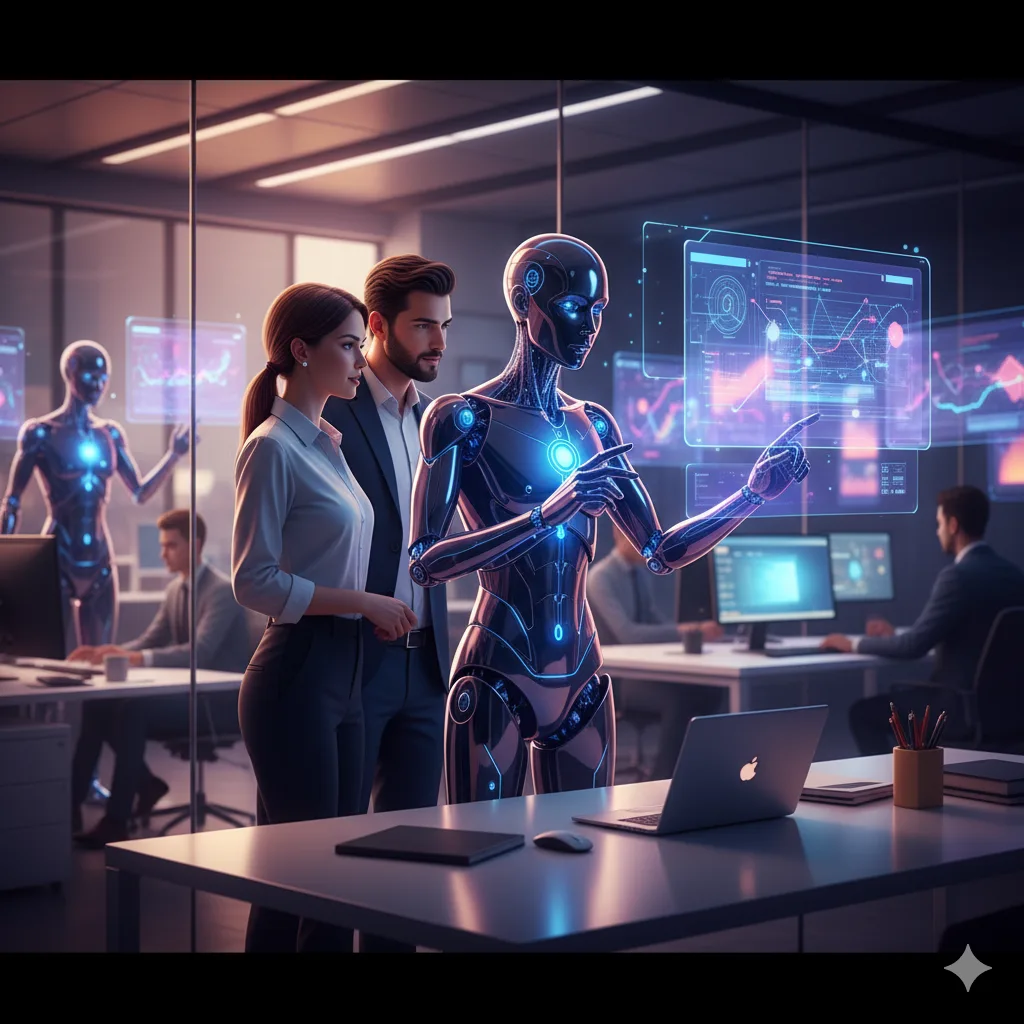
AI as a Creative Collaborator
Moving beyond autocomplete to co-creation: how teams can pair human judgment with machine exploration to design better systems.
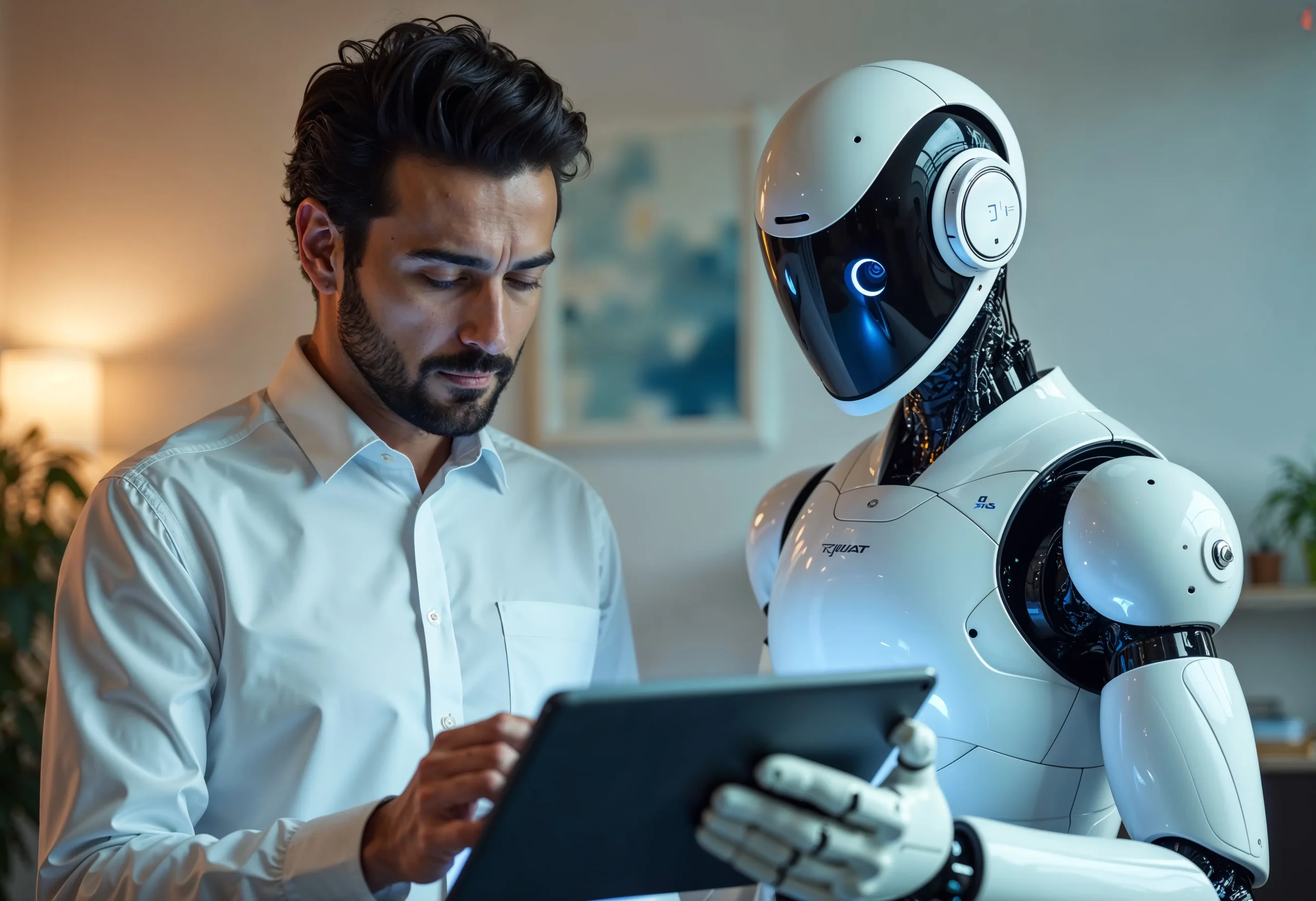
“We often frame AI as an assistant. But what happens when it stops being reactive and becomes a creative collaborator?”
For years, the story has been speed: AI helps type faster, fill in boilerplate, and suggest fixes. That’s helpful—but it sells the moment short. The real shift arrives when AI not only reacts to our ideas but proposes its own: architectures we hadn’t considered, optimization strategies that break our habits, even first-draft user flows from a sentence of product intent. That’s not “autocomplete on steroids.” That’s co-creation.
Co-creation doesn’t declare AI the architect. It reframes the relationship as a dialogue. Humans bring context, judgment, and empathy. AI brings speed, breadth, and relentless experimentation. Together, they can design systems neither would produce alone—provided we keep visibility, ethics, and practicality at the center.
What co-creation looks like today
Optimization scouting
From query plans to memory profiles, AI proposes refactors and data structures, often surfacing options seasoned engineers might skip under time pressure.
Architecture ideation
Given constraints (throughput, latency, data residency), AI suggests candidate architectures with trade-offs, failure modes, and rollout paths.
Feature flow drafts
With a few sentences of intent, AI generates user journeys, state diagrams, and first-pass UI specs that product and design can refine.
The value isn’t in accepting suggestions wholesale; it’s in exploring more options earlier—and then choosing deliberately.
Why this expands creativity
Developers, like all craftspeople, develop taste—and ruts. We default to patterns that worked before, especially under deadline. AI can canvass alternatives at a scale our attention can’t sustain:
- Explore multiple architectures against the same constraints and compare with annotated diffs.
- Generate adversarial test cases that challenge our happy-path designs.
- Propose unconventional but explainable approaches, from event-sourcing to CQRS to vector indexes—then justify when not to use them.
Exploration at low cost frees teams to consider bolder options—without betting the release on guesswork.
Risk: novelty without practicality
Novelty isn’t a virtue on its own. An elegant but unmaintainable design is a liability; a clever optimization that breaks privacy is a risk. Co-creation works when we channel novelty through guardrails:
- Practicality: can this be built, debugged, and operated by the team you have?
- Ethics: does the design honor privacy, fairness, and accessibility constraints?
- Sustainability: what’s the total cost of ownership—performance, reliability, staffing, and vendor lock-in?
Just because an AI-generated solution is novel doesn’t mean it’s right. Creativity still answers to constraints.
A dialogue-first workflow
Treat AI like a colleague in a design review—one that drafts quickly and responds to evidence. Make your prompts read like micro-specs, then demand rationale.
Role: Systems architect
Context: Multi-tenant SaaS; EU/US data residency; p99 < 120ms; bursty writes.
Task: Propose 3 architectures for audit logging:
– Option A: Postgres partitioned table + logical decoding
– Option B: Kafka + compacted topic + tiered storage
– Option C: Object store + metadata index + async compaction
For each: diagram, write path, read path, failure modes, privacy impacts, cost, rollout plan.
Constraints: No cross-region PII flow; zero data loss on region failover.
Output: Markdown + Mermaid diagrams + risk matrix + migration steps.
Checks: Call out unknowns; suggest experiments to reduce uncertainty.
Follow up with evidence-seeking prompts (“simulate load with these distributions,” “derive back-of-the-envelope costs”), then choose the simplest design that fits.
From ideas to code you can ship
Co-creation shines when it stays connected to reality—tests, telemetry, and docs. Bind creative proposals to concrete artifacts early.
Tests as contracts
Ask AI to draft property-based tests and mutation tests that encode invariants. Creativity survives scrutiny when the suite stays green.
Docs & diagrams by default
Generate ADRs, sequence diagrams, and API diffs alongside code so reviewers see the idea and its consequences together.
Telemetry scaffolds
Have AI add dashboards and alerts with suggested SLOs. If you can’t observe it, you can’t trust it.
pr.template:
– Summary & intent
– Alternatives considered (AI proposals)
– Risks & mitigations
– Tests (property/mutation/contract)
– Telemetry (dashboards/alerts)
– Docs/ADRs updated
– Rollback plan
Team practices that unlock co-creation
Share prompts publicly: keep a versioned prompt library for design, testing, and migrations.
Review the reasoning: require an explanation and references for non-trivial suggestions.
Bind to checks: compile, typecheck, security scan, contract tests, mutation tests—before a human approves.
Keep humans in charge: no auto-merge of creative diffs; require ADRs and rollout/rollback plans.
ai.collab:
require_explanation_over_lines: 20
validations: [build, type, unit, security, contract, mutation]
show_references: true
disallow_auto_merge: true
prompt_repo: “repo://prompts”
Anti-patterns to avoid
Decision by demo
A flashy prototype becomes a plan without threat modeling, privacy review, or cost analysis.
Private prompting
Hidden prompts produce inconsistent patterns and untraceable decisions. Keep collaboration visible.
Novelty worship
Choosing “new” over “fit.” Favor the simplest design that meets constraints with room to grow.
Consclusion
AI can stretch our imagination and compress our iteration loops. That’s the promise of co-creation: more options, considered faster, with better evidence. But creativity without accountability drifts into risk. Keep the dialogue active—ask for alternatives, demand rationale, bind proposals to tests and telemetry, and keep humans responsible for what ships.
Collaboration means dialogue. Humans bring context, judgment, and empathy; AI brings speed, breadth, and experimentation. Together, they can build systems neither would design alone.