AI & Architecture Drift
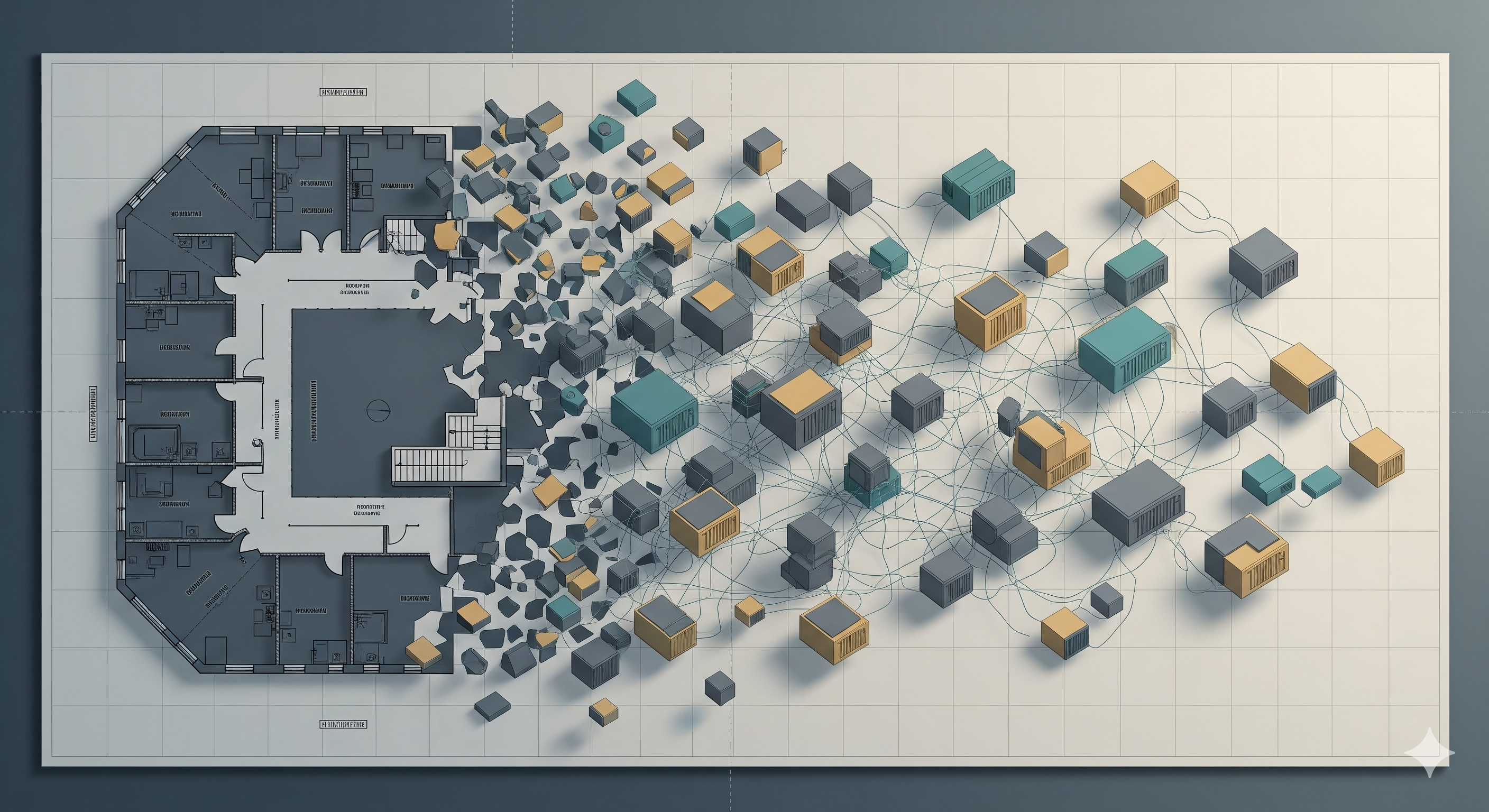
One of the subtler risks of using AI in coding is something I call architecture drift.
Every time we let AI generate a small module, write an API handler, or suggest a refactor, it optimizes for the immediate context. That’s great for local efficiency, but over time the bigger picture starts to shift. You began with a clean layered architecture; six months later, you find a microservice created for a one-off use case while a parallel piece of logic is embedded directly in a monolith. Both “work,” but the overall design is inconsistent.
This isn’t a nightmare scenario; it’s a slow erosion—like technical debt arriving by a thousand well-intentioned cuts. The good news: AI can also help reinforce consistency if we deliberately imbue it with architectural rules and paved paths. Without guardrails, though, we risk ending up with a patchwork of solutions that no single architect would have designed on purpose.
What Architecture Drift Actually Is
Architecture drift is the gradual divergence of your system from its intended design principles, patterns, and boundaries. It’s not the same as innovation; it’s innovation without convergence. Drift emerges when short-term solutions pile up faster than long-term harmonization. In an AI-accelerated environment, this divergence can happen quickly because assistants are exceptionally good at optimizing the “here and now,” not the “whole and later,” unless explicitly told otherwise.
“A complex system that works is invariably found to have evolved from a simple system that worked.”
— John Gall
Gall’s observation is a sober reminder: evolution beats revolution—if evolution is guided. Architecture drift is evolution untended. AI can accelerate both the evolution and, if you’re not careful, the untending.
Why AI Accelerates Drift
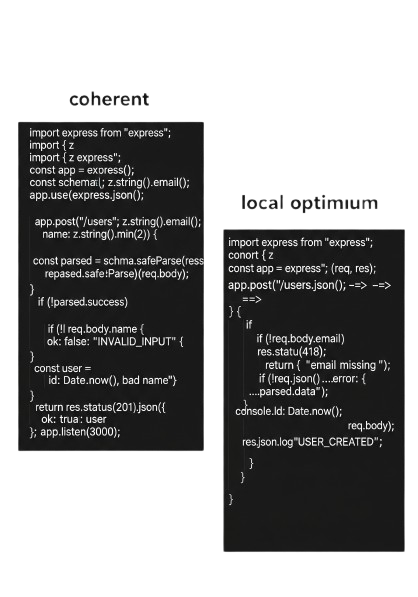
AI assistants prioritize immediate correctness and local coherence. Without explicit context, they can’t “feel” the gravity of your architectural choices. Common accelerants include:
Local Optimization
-
- Quick fixes and scaffolds are optimized for the file or module at hand.
- Assistants propose “good” code but not necessarily the project’s way.
Pattern Proliferation
-
- Different prompts yield slightly different stacks and idioms.
- Multiple “okay” approaches accumulate into systemic inconsistency.
Context Blindness
-
- Unless the assistant is fed ADRs, standards, and repo patterns, it defaults to generic solutions.
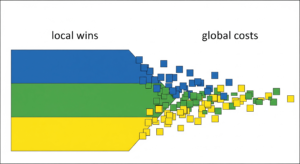
- “Correct here” can translate to “costly everywhere.”
How Drift Shows Up in the Real World
You’ll know architecture drift has taken hold when you notice:
- Inconsistent boundaries: new microservice spawned for a narrow case; parallel logic baked into a monolith elsewhere.
- Polyglot by accident: multiple ORMs, logging frameworks, or validation libraries across services without intent.
- Error semantics drift: every service returns errors in a slightly different shape.
- Onboarding friction: frequent “Where is X done?” questions; tribal knowledge spikes.
- Refactor tax: a simple cross-cutting change requires several bespoke transformations.
Replace “code” with “architecture” and the principle still holds. Consistency is a service to human comprehension.
The Upsides and Downsides of AI on Architecture
Upsides
- Rapid exploration of multiple approaches before committing.
- Lower barrier for cross-functional teammates to contribute.
- Automatable convergence once standards are explicit (codemods, AI-guided refactors).
- Faster onboarding when assistants scaffold to conventions.
Downsides
- Pattern drift and conceptual fragmentation if prompts are ad hoc.
- Security regressions when unsafe defaults creep in.
- Hidden operational complexity from “one more service” decisions.
- Ownership gaps: “the model wrote it” is not a governance model.
Vibe coding often nails “make it work.” Your process must institutionalize “make it right,” or “fast” turns fragile.
Case Studies Where Drift Was Visible
A few real-world stories illustrate how small choices accumulate into architectural detours:
Case 1: Payments Service Bifurcation
At a fintech, an AI assistant helped scaffold new payment flows quickly. Each new integration was correct in isolation but used slightly different validation and error semantics. Six months in, “the payments service” was four services with four personalities. The cost: every upstream system had to handle four flavors of errors. Convergence required a major rewrite.
Case 2: Logging Library Proliferation
An e-commerce platform found itself with three logging libraries across six services because each team used AI-assisted scaffolding without a standard prompt package. Debugging a cross-service incident meant parsing three log formats. Drift made incident response slower, not faster.
Case 3: Microservice Creep
A startup encouraged AI to “modularize aggressively.” Within a year, they had 40+ microservices, many single-function. The deployment and monitoring overhead swamped feature velocity. Architecture drift here wasn’t chaos—it was over-enthusiasm unchecked.
Drift costs compound invisibly until they break through as coordination tax.
Guardrails Against Drift
To prevent drift while still enjoying AI acceleration, you need guardrails:
- Architecture as Code: codify boundaries, module contracts, and naming in lint rules, generators, and ADRs.
- Prompt Packs: standardize prompts with explicit architectural context (“use NestJS modules with dependency injection, follow ADR-23 error contracts”).
- Continuous Convergence: schedule periodic AI-guided codemods to harmonize patterns.
- Human Oversight: architects should review not just features, but cross-cutting impacts of AI-authored code.
Detecting Drift Early
You can’t stop drift if you can’t see it. Invest in signals:
- Repo analytics for new dependency introductions.
- Cross-service contract validation (error formats, logging shape).
- Developer experience surveys (“Where did you find duplication?”).
- Architecture fitness functions baked into CI pipelines.
AI can spot drift patterns faster than humans—if we aim it there.
How to Use AI as a Drift Fighter, Not a Drift Fueler
AI itself can help reverse drift:
- Codemod at Scale: use AI to refactor inconsistent APIs into a unified style.
- Drift Reports: ask AI to summarize differences in logging, error handling, validation across repos.
- Standardized Starters: generate new modules from AI-curated templates that bake in paved paths.
- Enforcement Prompts: integrate architecture ADRs directly into IDE assistant instructions.
A Checklist for Leaders
- Do we have documented paved paths for AI to follow?
- Are our prompts architecture-aware, not just code-aware?
- Do we run periodic convergence passes?
- Is anyone accountable for systemic consistency?
If the answer to these is “no,” drift isn’t a risk; it’s a certainty.
Closing Thoughts
Architecture drift isn’t a new problem. But with AI, the speed at which it can accumulate is unprecedented. Left unchecked, it erodes coherence and slows delivery. With the right guardrails, though, the same AI acceleration can be turned toward consistency, convergence, and resilience.
The future isn’t AI vs. architecture; it’s AI as an architecture partner. But only if we teach it that design principles are as non-negotiable as syntax.
Drift is optional. Direction is a choice.